10.10.10.1 Login Admin
10.10.10.1 Login Guide: How to Access Your Router Admin Panel, Configure Network Settings and Fix Login Issues
Have you ever attempted to update your WiFi password, strengthen network security or configure router commands only to become bewildered as to where to turn? Tucked into the back of many router configuration pages is a pairing address that connects users to their device settings: 10.10.10.1.
This is a complete guide about 10.10.10.1 that will teach you what it is, how to log into your admin panel settings & why the default login details do not work, & how to fix the page when it shows a 404 page not found error 404 problem? This guide will help you understand 10.10.10.1 and how to use it, whether for home or professional use
What Is 10.10.10.1?
10 10 0IPv4 Private Address 10www.10 1 is a common private IPv4 address that identifies a router, gateway, or networking device within local networks. Private IP addresses are not exposed to the public internet, so devices cannot communicate throughout the internet.
With 10.10.10.1 as the gateway address of the router, devices attached to the network can send and receive an address from the router through this IP Address. Users can type this IP address into a web browser to access the router configuration page and modify settings regarding wireless security, network preferences, connected devices and system management.
Why Is 10.10.10.1 Used for Router Access?
Routers made today are not basic home network appliances; They’re powered by sophisticated management systems that give users the ability to configure their network behavior. These internal controls are accessed through the 10.10.10.1 router login page. Using this interface, users can configure wireless settings, view network activity, update security features, and many more features across various connections.
A home user may visit the admin panel to set a more robust WiFi password or even an IP address reservation for their devices, while a network administrator might log on to make adjustments to which equipment gets which IP addresses, firewall configurations, and connected equipment.
How to Log in to the 10.10.10.1 Admin Panel
Normally, as far as accessing the 10.10.10.1 admin login page is concerned, it is a very quick process. First, but your device has to be connected to the right network.
- Connect to the router. If you can, connect your computer, smartphone or tablet via WiFi or an Ethernet cable to the router. If your device is attached to other connections, 10.10.10.1 will not connect you to the appropriate router interface in that case.
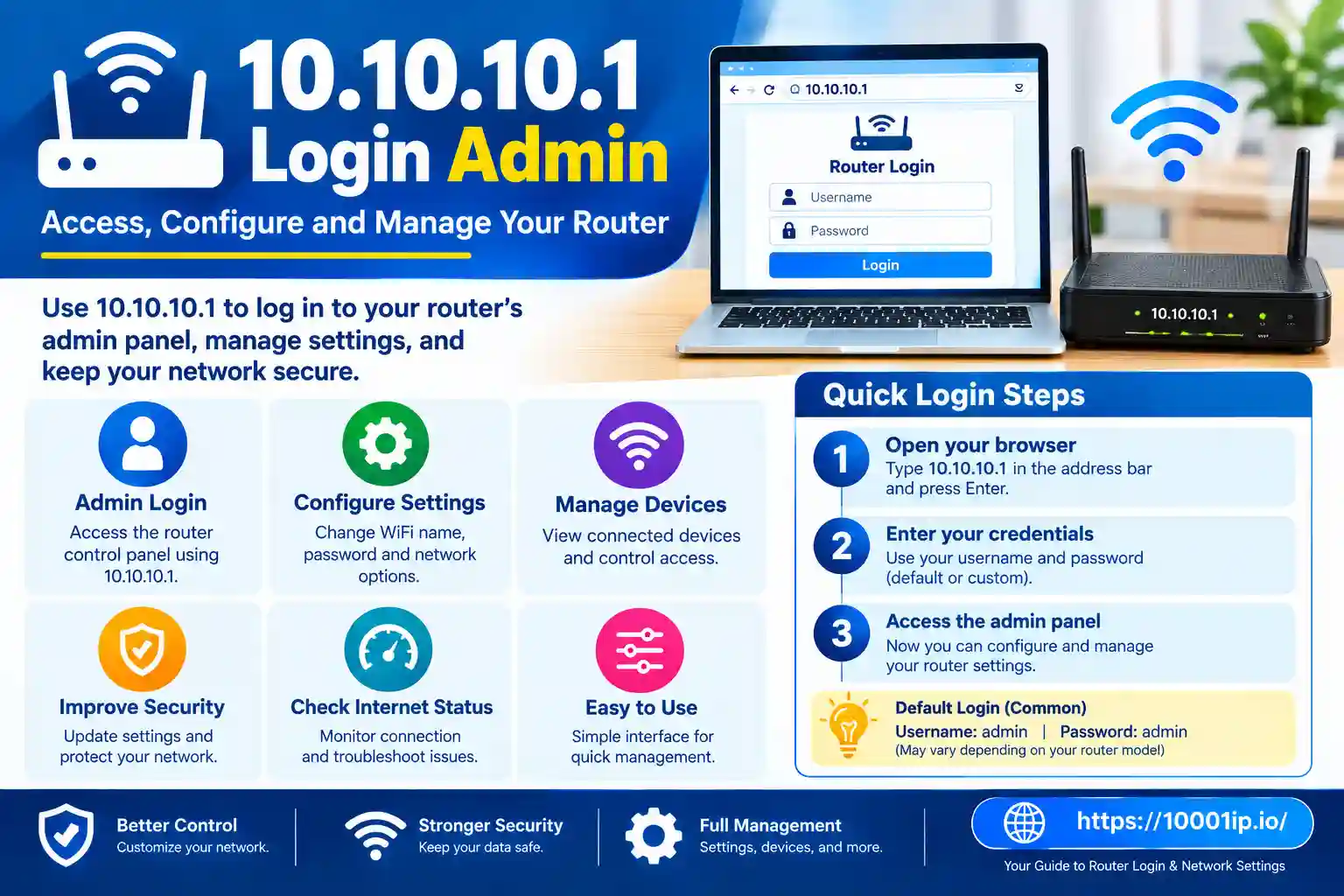
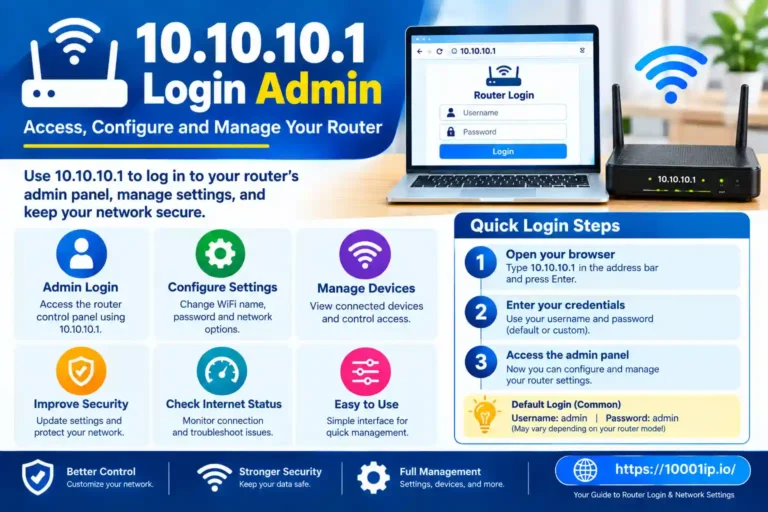
In our case, after making the connection, we will open a web browser and enter:
- https://10.10.10.1
- Type in the address in the browser, away from search engine.
- If this IP address is the one used by your router a login will be displayed requesting an administrator username and password. Type your credentials and click on the login button to get into the router dashboard.
- After logging in you can see and change some of the various network settings as necessary.
Understanding 10.10.10.1 Default Username and Password
Most users need to know the 10.10.10.1 default username and password to gain instant access to their router setup page, but this is not a universal combination, and it does not work for absolutely all devices that use the given IP.
Different router models from the same manufacturer commonly have different default credentials set. Devices could be using common combos like admin/admin; others may have a sticker on the router with a one-of password. If you don’t have those on hand, look for a sticker on the back or bottom of your router. This is where a lot of manufacturers detail the default username, password, WiFi name and so on.
How to Change WiFi Password Through 10.10.10.1
The most common reason for people using the 10.10.10.1 router login page is to change their WiFi Password.
- If your wireless password is weak, anyone can access your network and use up your bandwidth or create a security hole. Changing your password regularly is one of the simplest ways to secure your internet.
- Log in to the router admin panel. Navigate to the section of your wireless or WiFi settings. That exact name might vary from router to router manufacturer.
- Search for something like Wireless Security, WiFi Password, Security Key or WPA Settings. Now input the new password and save changes.
- The password must be a combination of uppercase and lowercase letters, numbers, and special characters. Do not use easily obtainable information like your name, phone number or home address.
- When you change the password, it will disconnect all devices that were connected before and require them to connect again with the new credentials.
Common Reasons Why 10.10.10.1 Is Not Working
- Unable to access the router login page issue faced by many users. It is generally due to a connection problem, bad configuration or a different Router IP Address.
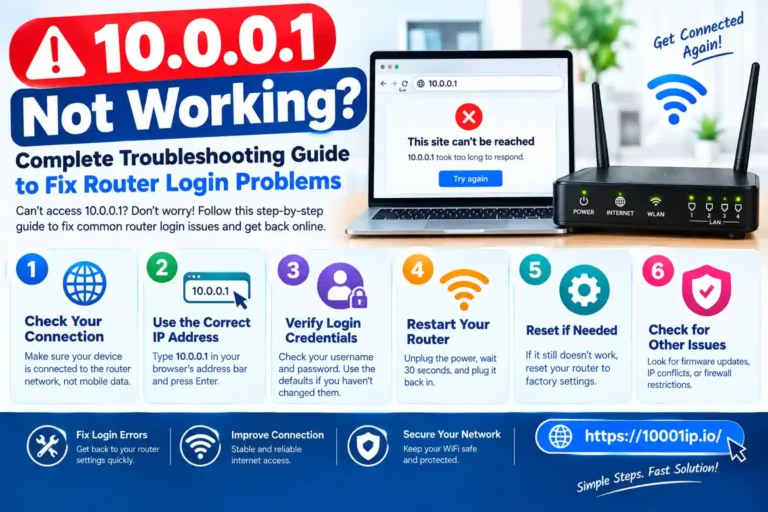
- Check Whether Your Device is connected to the router network. As the IP address 10.10.10.1 is a private IP, it will only work inside your own home network. It is not capable of being accessed beyond the connection to the router.
- Entering the wrong IP address is another common reason. A router will often use another private address like 192.168.1.1 or 192.168.0.1 as a gateway configured by the manufacturer.
- This problem can also be caused by issues in the browser. You can try to clear the browser cache, change the browser or open it in private mode.
- Sometimes, rebooting the device can resolve temporary connection problems if the router is not responding. Alternatively, power cycle the router by turning it off for a few seconds and then back on again.
How to Improve Router Security After 10.10.10.1 Login
While gaining access to your router admin panel will make you to control your network, it means a responsibility at the same time. Modifying default configurations will make your network less susceptible to hazards.
- You start by changing the default admin password. One of the biggest security issues is users using factory credentials.
- As much as possible, you should also be checking for modern wireless security standards (preferably WPA2 or WPA3). They provide better protection than prior security methods.
Conclusion
10.10.10.1 login address is an easy way to access your router and manage your router settings while on the local network itself. From changing your wi-fi password to enhancing security on the local network or managing gadgets connected to your network, you have full control and flexibility using the router administration page.
While not used on all routers, 10.0.0.1 still continues to be a significant private IP address for specific networking devices and setups. Understanding how it works is useful for troubleshooting connection issues and keeping a more secure, reliable network.
FAQs
What is 10.10.10.1 used for?
10.10.10.1 is a private IPv4 address, commonly used to access the configuration interface of wireless routers and other networking hardware
What is the 10.10.10.1 login page?
The first thing you would want to do is connect to your router network, go ahead and open a browser, type in http://10.10.10.1 where the IP address of your router appears and provide your username and password as an administrator.
Why is 10.10.10.1 not opening?
This could be because your router is managing the IP address, your device is not connected to the correct network and the router just cannot be reached at all.
Does 10.10.10.1 require internet access?
No. Because it is a local router address, you can access it even with no internet connection.