192.168.0.1
192.168.0.1 Router Login
Have you ever thought about how your router connects all these devices to the Internet or where you can change your WiFi password?
Many times, the answer is a number: 192.168.0.1. This handful of numbers is technically a gateway to your router’s backend command center: with it, you can tweak and tune your network.
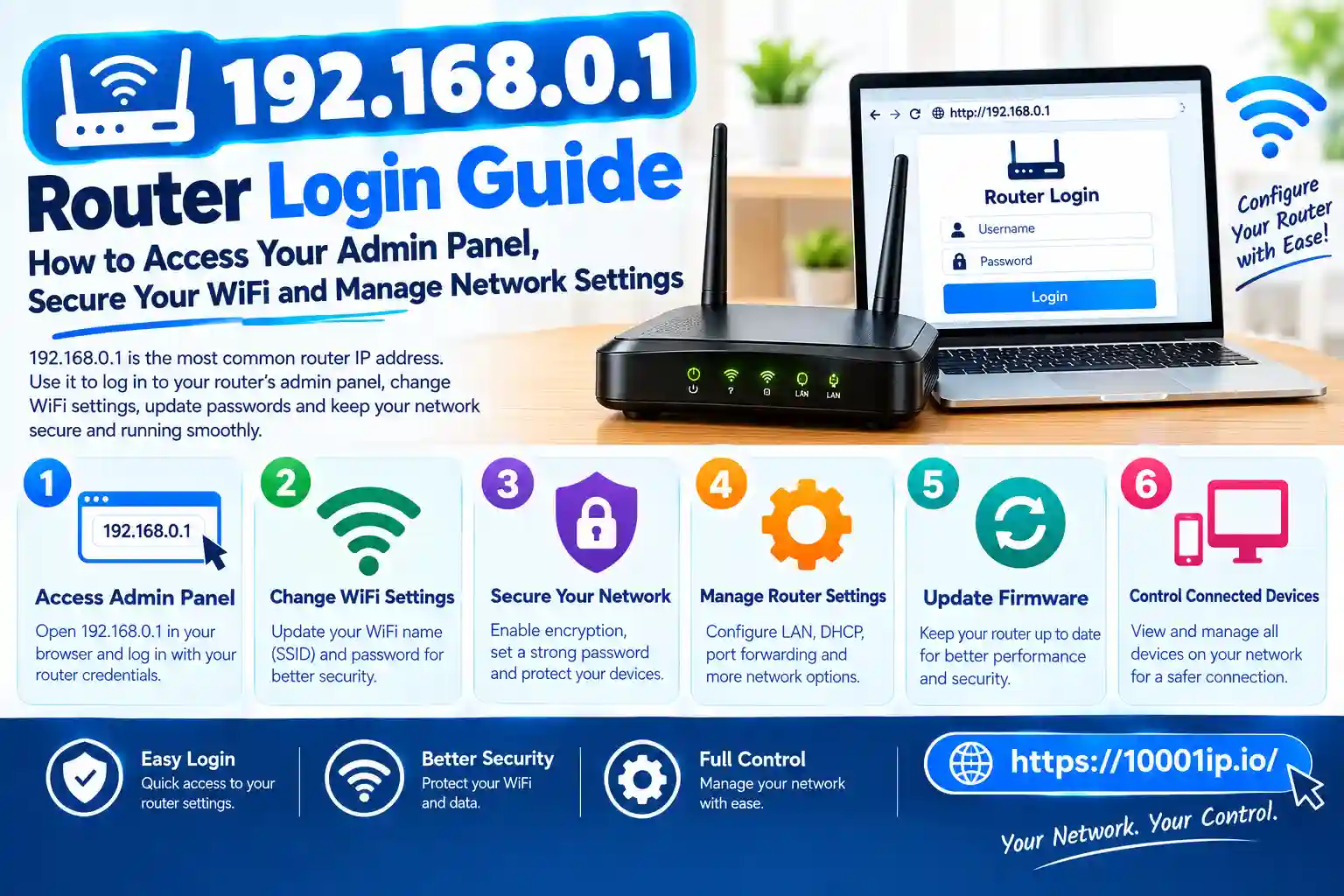
192.168.0.1 is one of the most commonly used private gateway addresses you’ll find on home routers and networking devices. Using this address, you can visit the router configuration page to change security features, manage connected devices and enhance your internet experience.
This comprehensive guide is your ultimate companion to everything 192.168.0.1 login, from accessing the router dashboard and changing default credentials to changing WiFi settings, troubleshooting common errors and setting access rules for outsiders who seek unauthorized access to your network.
Understanding 192.168.0.1: The Control Center of Your Router
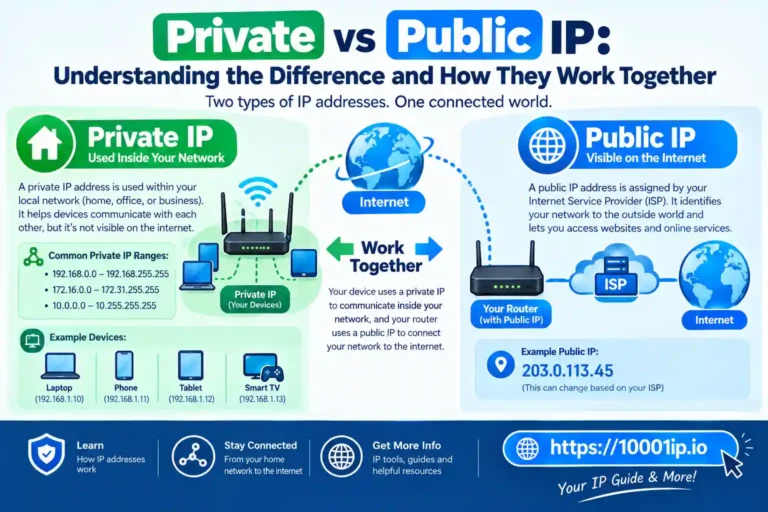
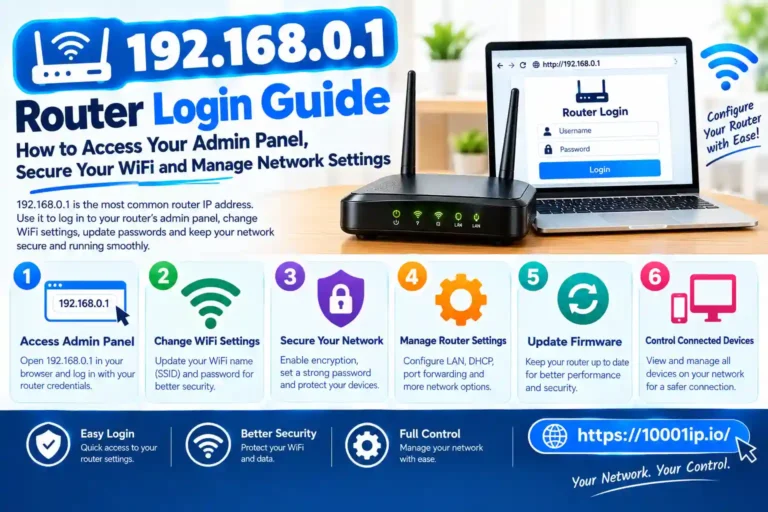
All devices need an IP address to communicate on a network. Your public IP address might make you identifiable to the world, but private IP addresses connect devices within an internal network with the router at your local site. 192.168.0.1 is a private IPv4 address that many router manufacturers set as the default gateway. It lies in the private IP ranges designated for local networks and so it cannot be accessed directly from the internet.
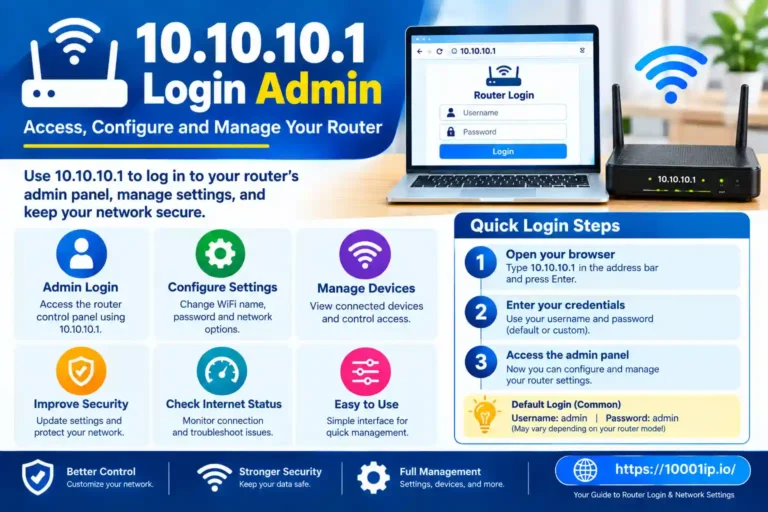
So, if you type the link like http://192.168.0.1 and are connected to your router, you are actually opening a local management page inside your router. This page allows you to read the device settings without having an internet connection. Popular router brands such as TP-Link, D-Link, Netgear, and other networking companies use this address for their administration interfaces. The precise default IP varies by router model and manufacturer configuration.
Why 192.168.0.1 Matters for Everyday Internet Users
Routers are not merely devices that provide access to the internet. They handle all the communication between your devices and the external environment.
The 192168.1.1 admin login page helps users control key network settings. You can change wireless configurations, enhance security measures, view connected devices as well as perform connection troubleshooting from this dashboard.
For instance, you can use the router interface to check whether any unknown devices are connected to your WiFi network. If your internet speed feels slower than usual, checking router settings can lead to finding out possible issues.
Using a router configuration page, users can also create an individual network environment. You can rename WiFi networks, password updates, set parental controls, configure security options and adjust advanced settings.
How to Open the 192.168.0.1 Login Page
No, accessing your router’s admin panel does not need special software or highly technical expertise. All you require is a device connected to the router.
To start your computer, laptop or smartphone must connect to the router WiFi network. When your device is on mobile data or another wireless network, the login page will fail to open because the address belongs exclusively to your local network.
When the connection is established, open any web browser and type in:
- http://192.168.0.1
- Also, type the address correctly into the browser address bar. Don’t fall into the trap of typing extra words or googling it, since the router page is certainly NOT an ordinary website.
- If this IP address is used by your router, then you will see a login screen prompting you for the administrator username and password. The Control Panel login is shown when entering the username and password.
- After you log in, you can configure your router settings as needed.
Step-by-Step Process to Change WiFi Password Through 192.168.0.1
- One of the most essential things that you can do through the 192.168.0.1 router settings page is to change your WiFi password.
- For a long time, a lot of users still use the default password that comes with their routers. Sharing a unique password itself makes it very difficult for unauthorized users to enter your network.
- Once logged into the admin panel, access the wireless settings. It may also display as Wireless Settings, WiFi Settings or WLAN Configuration depending on your router model.
- Find the password key, often referred to as Wireless Password or Security Key or Pre-Shared Key. Save the new password.
- After you apply the update, your router may also restart the wireless connection. Each connected device will have to reconnect with the new password.
- An effective password is complex, consisting of a blend of characters and should not be any information easily found such as names, birthdays or phone numbers.
Managing Connected Devices Through 192.168.0.1
Device management is another helpful option you can find in lots of router interfaces. On the page where you log in, a connected devices section should list any smartphones, computers, smart TVs and other kinds of equipment that are currently using the network.
Find My Feature helps you detect any devices that are connected to your phone without permission.
If you see device are unknown, is good way about changing your WiFi password and enable stronger wireless protection.
Then, there are even high-end routers that enable you to block devices, that is, stopping them from entering your network) or restrict them by setting up specific schedules.
Common Problems When 192.168.0.1 Does Not Open
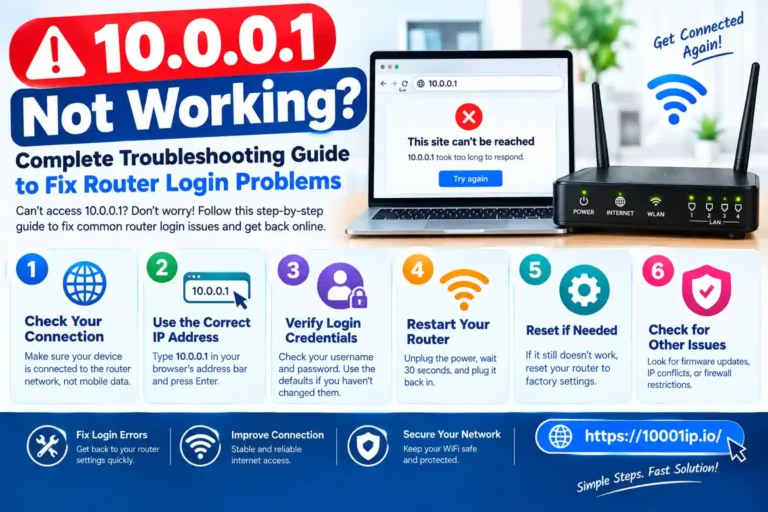
Normally the router page is fairly easily accessible; however some customers run into issues. It is common to search for 192.168.0.1 not working because of various issues that prevent you from accessing it.
The initial option you have is that your router has been set to a different IP address. Not every router uses ip 192.168.0.1. However, some devices use alternatives such as the following: 192.168.1.1 Login admin or 10.0.0.1
Another is an incorrect network connection. You should connect your device via the router network. The page won’t load if you’re using mobile data or another WiFi connection.
Typing errors. Ensure that you write the IP address correctly without spaces or other characters.
Access is sometimes blocked because of temporary router issues. A simple restart of the router can clear up the connection, renewing it and fixing minor problems.
Conclusion
192.168.0.1 is where all network management and control begins for both your home and office networks. The router admin panel lets users manage connected devices, set bandwidth limits, adjust WiFi passwords and manage network security.
Once you know how to access 192.168.0.1, fix login issues, and set the needed settings, you can make your internet faster, safer and more reliable. The admin panel also gives users everything they need to manage and work with their router to improve and better secure their WiFi networks, gain better control of their networks and improve connection stability.
Remember to change the default login, enable security, and update your router regularly. With proper configuration and regular maintenance, the router will better help you achieve your networking goals and make the internet safer for all of your devices.